A Century of Hidden Complexity: The Evolution of Ehlers-Danlos Syndrome Research
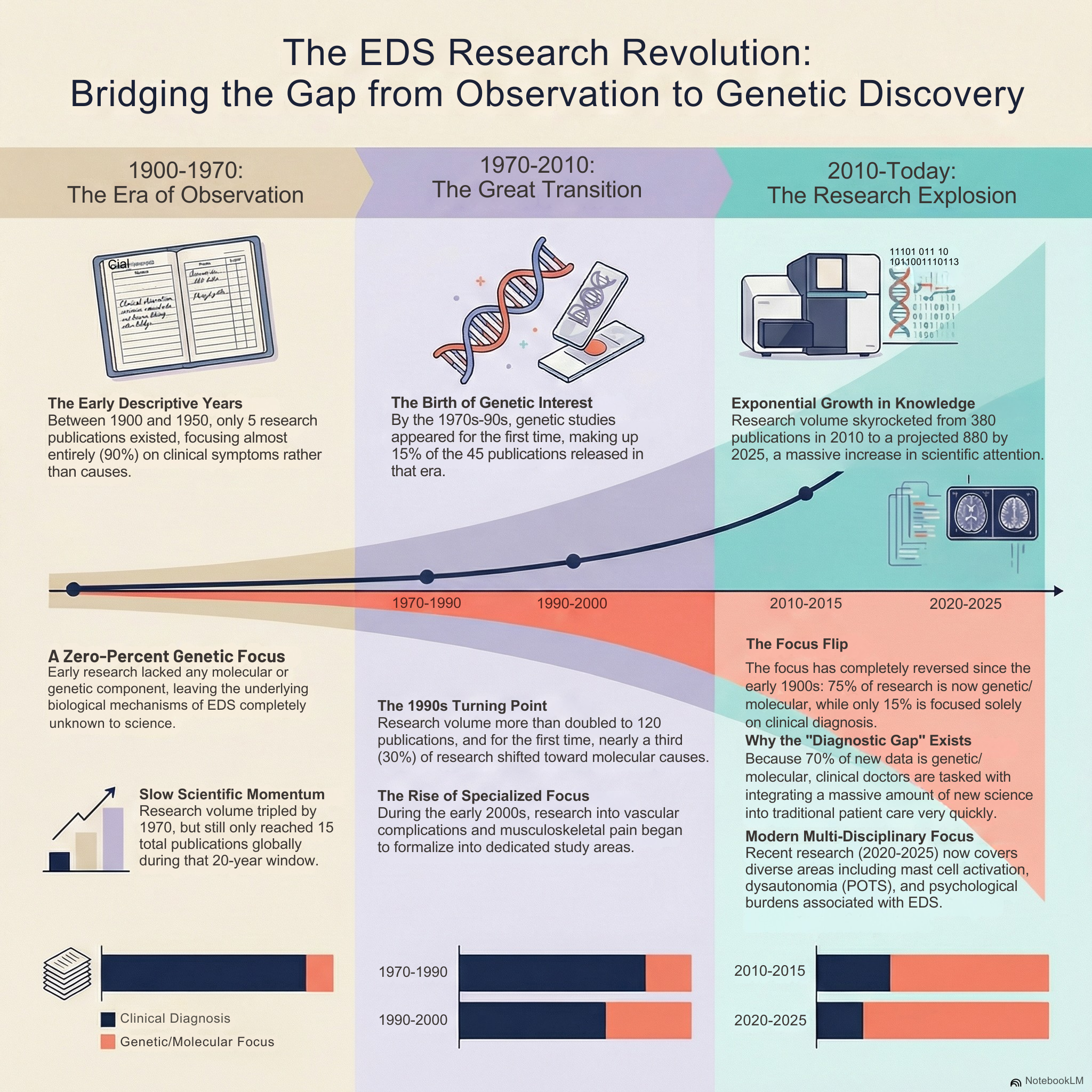
From 90% clinical observation (1900-1950) to 70% genetic/molecular focus (2020-2025)—this dramatic shift transformed EDS research but left hypermobile EDS, the most common form, without a genetic test.
I traced the history to understand why diagnosis still takes 15+ years despite over a century of research. Turns out, today's diagnostic gaps are predictable outcomes of how EDS knowledge evolved.
The full story reveals surprising truths about early diagnostic anchors, molecular breakthroughs that helped some subtypes but not others, and why patient experience consistently preceded medical recognition.
Making Sense of POTS: A Deep Dive into the 2025 Consensus on Diagnosis, Biology, and Care
For too many people, receiving a POTS diagnosis comes only after years of medical appointments, misdiagnoses, and the painful experience of having real physical symptoms dismissed as anxiety. With diagnostic delays averaging 5-7 years (nearly double for women), and prevalence increasing to 3.42% post-COVID, the need for clinical clarity has never been more urgent.
A landmark 2025 state-of-the-art review published in Heart, Lung and Circulation synthesizes current expert consensus, offering a biologically-grounded framework for understanding this complex condition. The message is clear: POTS is not a Functional Neurological Disorder, it's not caused by deconditioning, and it's not psychological. It's an objectively measurable disorder of the autonomic nervous system.
This comprehensive guide breaks down:
- The official diagnostic criteria and why a single negative test doesn't rule out POTS
- The two main (often overlapping) biological profiles: hyperadrenergic and hypovolemic
- Why microvascular dysfunction explains symptoms like brain fog and temperature intolerance
- The evidence contradicting the harmful deconditioning myth
- The layered treatment approach: foundational lifestyle interventions (3L water, 10g salt, waist-high compression), targeted medications (all used off-label), and carefully paced exercise progression
Whether you're a patient seeking validation and understanding, a caregiver supporting someone with POTS, or a clinician looking to improve care, this review provides the mechanistic understanding needed to shift the conversation from questioning symptoms to addressing underlying physiology.

When Your Body’s Autopilot Goes Rogue: Understanding Dysautonomia
Dysautonomia is more than dizziness or fatigue, it’s a full-body systems disorder rooted in miscommunication between your brain, nerves, and blood vessels. In this deep dive, I break down how the autonomic nervous system works, why it goes haywire in conditions like POTS and Ehlers-Danlos syndrome, how to get the right diagnosis, and practical ways to stabilize your body’s “autopilot.”

Why Does it Hurt so Much Part 1
Discover how pain acts as your body’s alarm system, the role of nociceptors, and why pain becomes chronic, especially in Ehlers-Danlos Syndrome (EDS). Learn the science behind different pain types and how you can retrain your nervous system to manage chronic pain.